
Important Disclaimer: The information within this TRT training guide is provided for educational purposes only. It is not a substitute for professional medical advice, diagnosis, or treatment from a qualified healthcare provider. Participants should consult their healthcare provider before initiating any new medical treatment or modifying existing ones.
Understanding TRT (Testosterone Replacement Therapy)
Testosterone Replacement Therapy, or TRT, is a medical treatment designed to restore healthy testosterone levels in individuals diagnosed with low testosterone, also known as hypogonadism. Testosterone is a vital hormone primarily produced in the testes (in men), with smaller amounts originating in the ovaries (in women) and the adrenal glands (in both sexes). Safe and effective TRT requires continuous medical oversight, regular laboratory monitoring, and responsible lifestyle choices.
Training While on TRT
Patients undergoing TRT will quickly experience numerous physiological effects from increased testosterone levels. It is crucial to be aware of several important factors when engaging in physical exercise during TRT.
Enhanced Performance Potential: TRT patients often report reduced muscle soreness and quicker recovery times between workouts, enabling them to train harder and/or more frequently. Individuals who consistently incorporate resistance training into their routine can expect more accessible lean muscle gains and an overall increase in muscle mass. During workouts, patients typically experience elevated energy levels, increased intensity, and a greater sense of motivation to maximize each training session.
Training Smart: Avoiding Overtraining: It is common for TRT patients to observe and feel rapid results, which can lead to increased motivation and energy to train more intensely. However, patients must be mindful of overtraining, as this can place excessive stress on the body, increasing the risk of injuries or central nervous system fatigue. During resistance sessions, patients will possess the strength to lift heavier weights and progress faster. It is highly recommended to implement progressive overload gradually, avoiding sharp increases in either load, volume, or both. Remember, the body still requires adequate recovery and nutrient replenishment, making consistent sleep and hydration schedules critical. While testosterone accelerates muscle protein synthesis, leading to faster increases in size and strength, this rapid muscle growth can sometimes outpace the development of connective tissue, increasing the risk of tendon and ligament damage.
Training with an experienced fitness coach while on TRT is highly recommended and important to ensure the program is safely and effectively tailored to your specific physiological changes, optimizing results and minimizing risks.
Potential Side Effects:
Mind-Body Awareness: TRT patients must consistently monitor their moods, energy levels, fatigue, and overall well-being. Should symptoms such as anxiety or aggression emerge, it is strongly advised to schedule a check-up with a healthcare provider to assess testosterone levels, as these could indicate an overly high dosage.
TRT can have serious short-term and long-term side effects that are important to understand. Please consult Dr. B or your general practitioner to discuss further.
Recommended Training Program
F45 Training HQ advises TRT patients to maintain a minimum of three training sessions per week, prioritizing resistance sessions performed at an intensity appropriate for their physical capabilities. While patients may feel motivated and energized to increase their weekly training frequency, it is crucial to remember the vital importance of recovery days.
TRT patients can leverage F45 Training resistance days or at-home sessions to capitalize on improved anabolic capacity, while utilizing cardio or hybrid days to support heart health and prevent becoming overly strength-focused. It is suggested that patients adhere to a regular, balanced weekly workout plan and discuss their TRT journey with an F45 Training coach or personal trainer to safely increase their training volume or weight loads.
Accessing Workouts
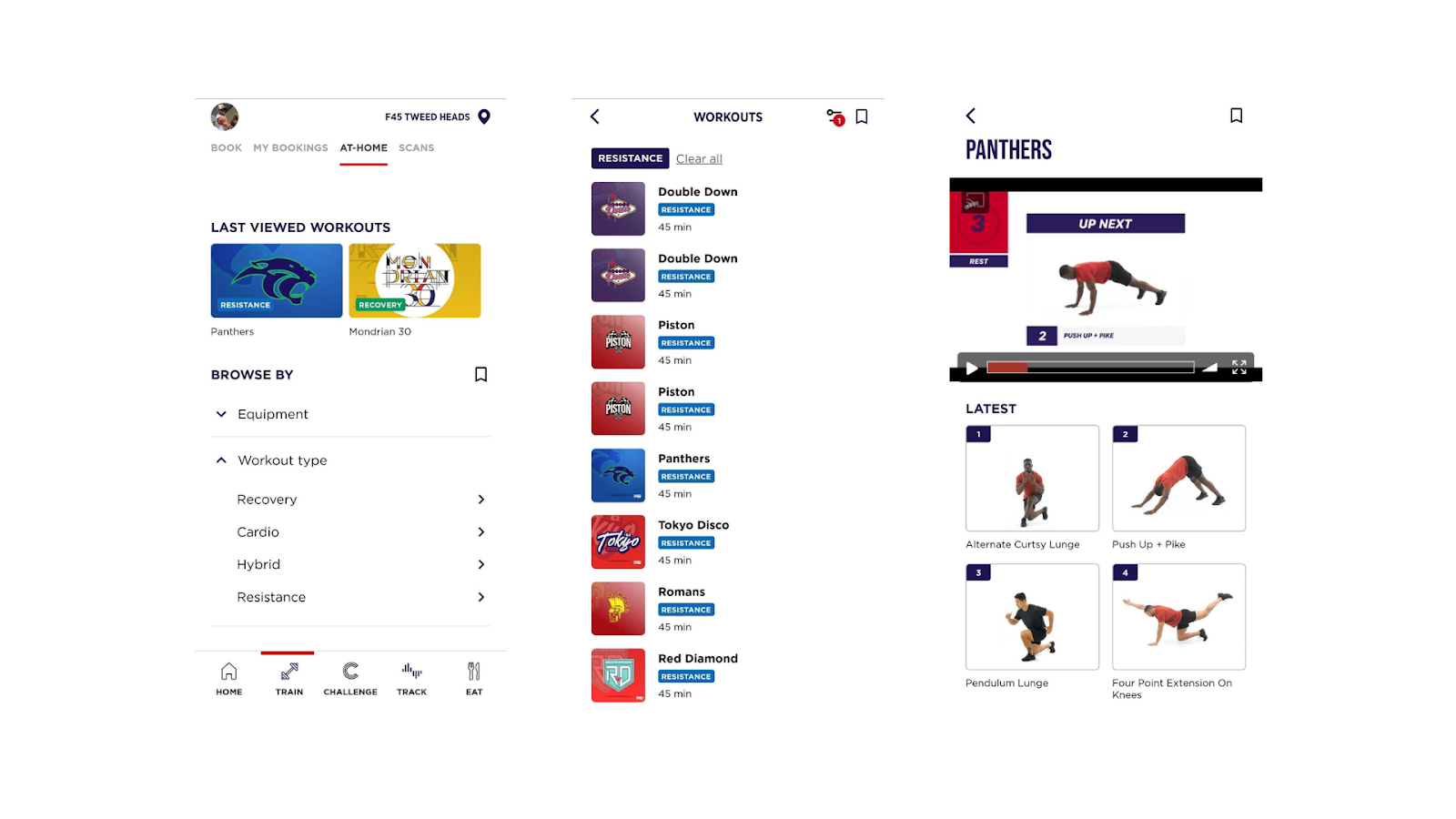
Workouts are accessible in the "TRAIN" section of the F45 Training app, under the "AT-HOME" tab. Members of the Dr. B x F45 Training [INSERT PROGRAM NAME] program can search for specific workout types, choosing between weighted or bodyweight options. Weighted options will require additional equipment. All Cardio, Hybrid, and Resistance workouts are approximately 45 minutes long, with recovery workouts available in roughly 15-minute or 30-minute durations.
Once a workout is selected, all exercises will be displayed, and the workout video will be ready to play. The workout video can be mirrored to a larger device or TV if preferred. Each workout begins with an explanation of the timings, format, and number of exercises, followed by an exercise demonstration before proceeding to the warm-up. Hydration breaks are incorporated throughout the workout. Therefore, Dr. B x F45 Training program members are encouraged to have a full water bottle and sweat towel readily available when they begin their workout.
Example of an F45 Training AT-HOME Workout in the F45 Training App
Dr. B Optimize It program patients receive access to exclusive in-studio F45 Training membership offers. Any patient in the program can get 15% off a 3-month unlimited in-studio membership or 20% off a 6-month unlimited in-studio membership.